
 X
X WeiBo
WeiBo WeChat
 Facebook
 LinkedIn
 Reddit
 Bluesky
Drinking water safety: the overlooked endocrine-disrupting effects of disinfection byproducts
- Volume
- CitationLiu Z, Zeng Q. Drinking water safety: the overlooked endocrine-disrupting effects of disinfection byproducts. Int. J. Environ. Epidemiol. 2026(3):0013, https://doi.org/10.55092/ijee20260013.
- DOI10.55092/ijee20260013
- CopyrightCopyright2026 by the authors. Published by ELSP.
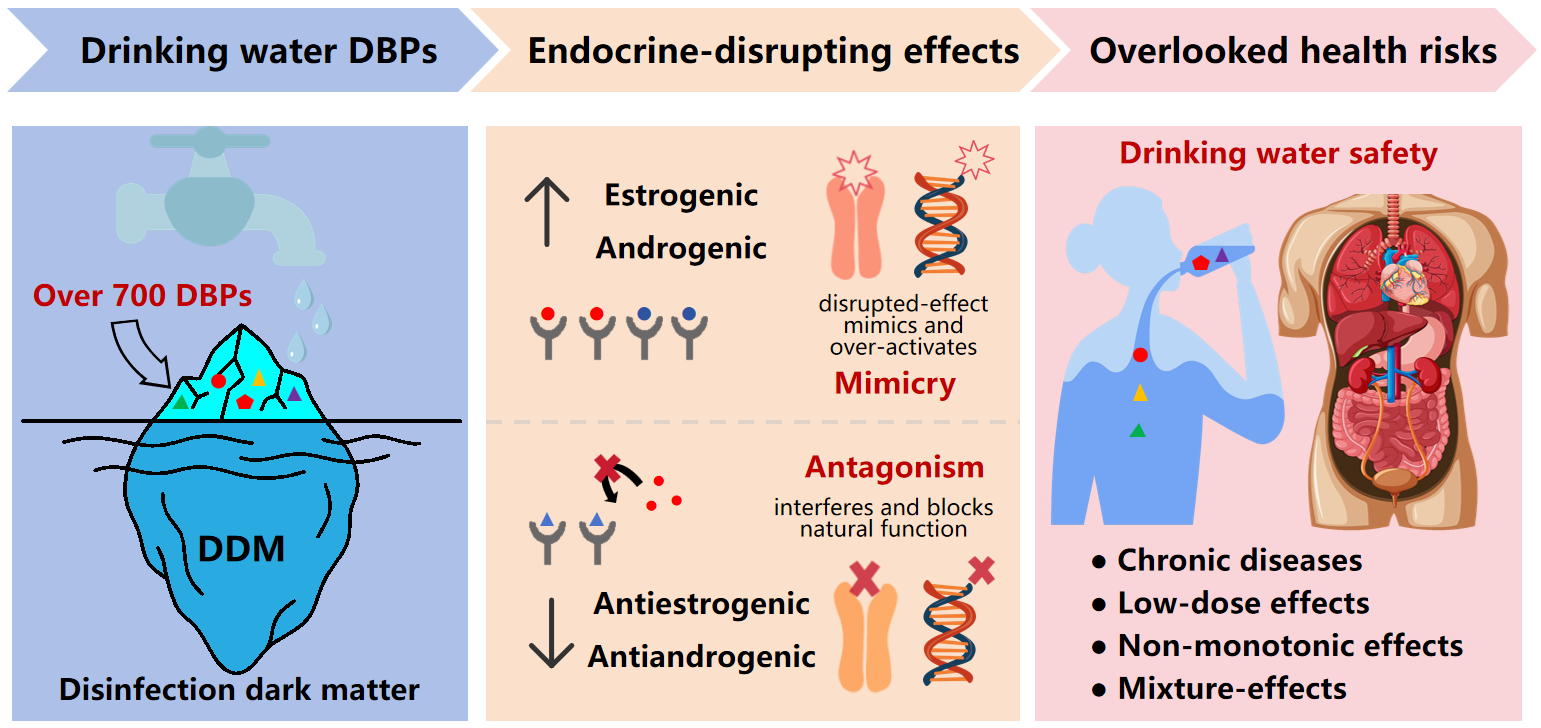
Disinfection byproducts (DBPs), as ubiquitous chemical contaminants in drinking water, pose a significant threat to public health owing to their documented genotoxicity, carcinogenicity, and reproductive and developmental toxicity. However, the endocrine-disrupting effects of DBPs have long remained overlooked. Recently, accumulating evidence from both experimental and human studies has suggested that certain DBPs can exert estrogenic, androgenic, antiestrogenic, and antiandrogenic activities, implicating that DBPs elicit potential endocrine-disrupting effects. Given that endocrine-disrupting properties represent key biological mechanisms contributing to a broad spectrum of adverse health outcomes, this perspective contends that exposure to drinking water DBPs may underpin overlooked health risks including chronic diseases, highlighting an urgent paradigm shift in how we evaluate drinking water safety. Knowledge gaps and future directions on the endocrine-disrupting effects of DBPs are also proposed.
disinfection byproducts; drinking water safety; endocrine-disrupting effects; health risks
