

ExRNA
ISSN: 3005-5431 (Print)
ISSN: 2398-0060 (Online)
CODEN: EXRNAP
CiteScore 2025: 1.2
No items found.
Roles of RNAkines in regulating glucose homeostasis
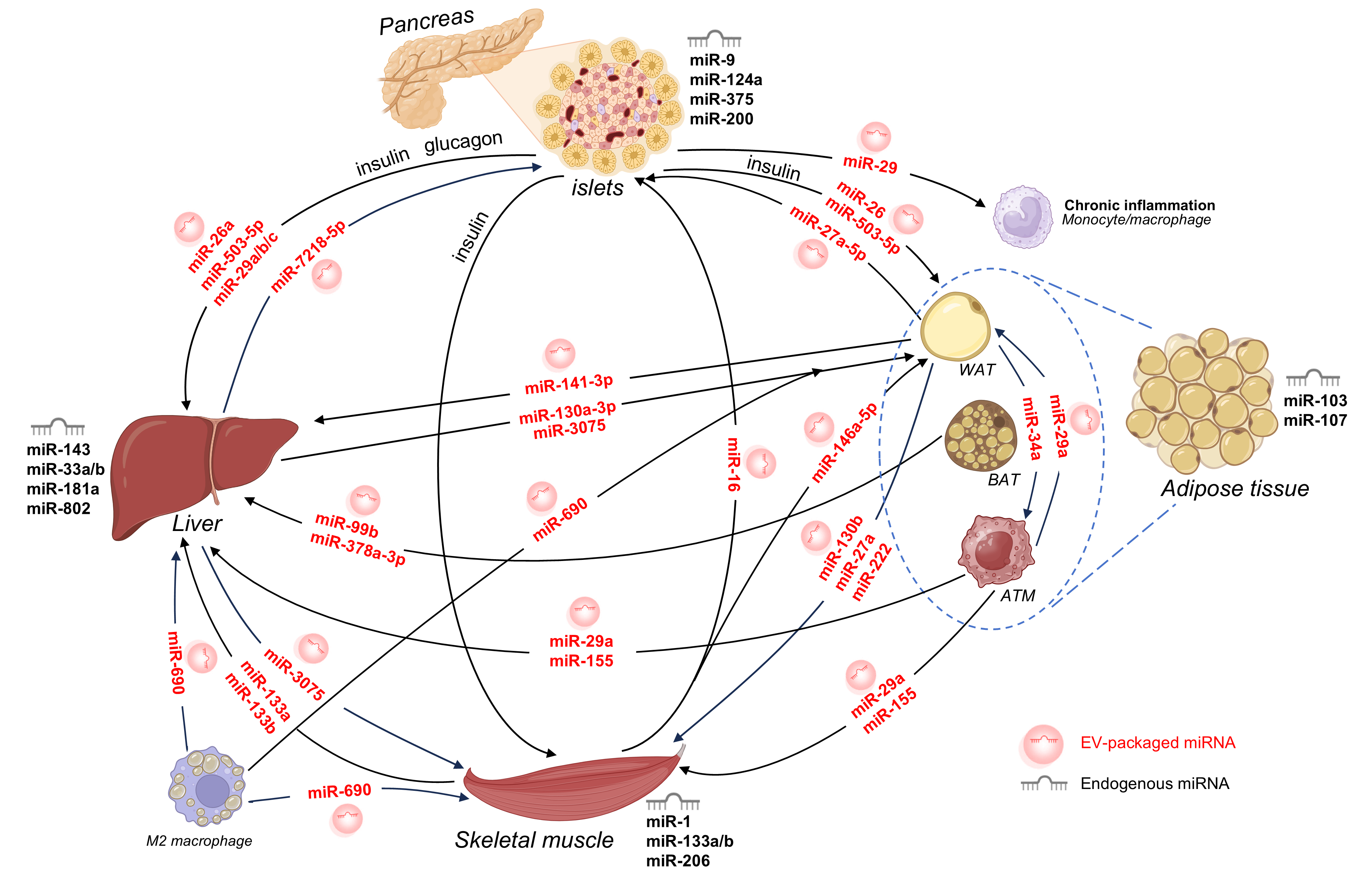
Under physiological conditions, the body maintains glucose homeostasis through interorgan communication between metabolic organs. As is well known, this crosstalk is mediated by traditional hormones or metabolites. Recently, a new type of secreted factor called RNAkine has become increasingly prominent in regulating glucose homeostasis. They are secreted non-coding RNAs that are mainly transported from the origin cells to the target cells through extracellular vesicles (EVs), participating in interorgan communication. In this review, we summarized the various organs involved in glucose homeostasis and their inter-organ crosstalk, and emphasized the important role of RNAkines which is of great significance for both the prevention and treatment of type 2 diabetes mellitus (T2DM).
Bovine mRNAs in small extracellular vesicles from cow’s milk are not bioavailable in mice and translation products are not detectable in reticulocyte lysates and human U937 cells
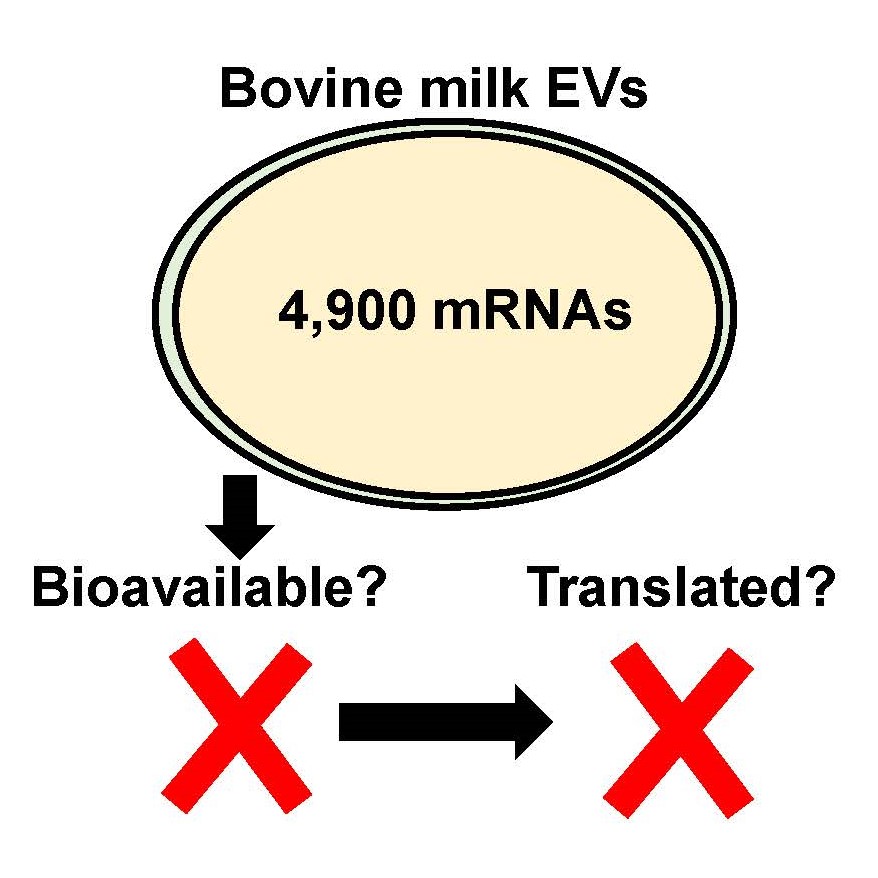
Aim: Small extracellular vesicles from bovine milk (BEVs) have garnered attention as vehicles for delivering therapeutics to pathological tissues. Theoretically, mRNAs in BEVs might be translated into proteins, thereby eliciting immune responses in patients. The objectives of this study were to provide a comprehensive analysis of mRNAs in BEVs, assess mRNA bioavailability, and determine whether mRNAs are translated into proteins. Methods: BEVs were purified from raw cow’s milk (RM) by ultracentrifugation and treated with RNase to remove mRNA adsorbed to BEVs. BEVs were also isolated from store-bought milk (SBM) and analyzed with (SBM+) and without (SBM–) RNase treatment. mRNAs were analyzed using the Illumina HiSeq2500 platform. Bioavailability was assessed by administering BEVs loaded with IRDye-labeled bovine Casein Kappa (CSN3) mRNA by oral gavage in Balb/c mice. Translation was assessed using a rabbit reticulocyte lysate system (using RNA purified from BEVs) and human U937 monocytes (cultured with BEVs). Results: We identified transcripts of 4,858, 2,680, and 4,554 genes in BEVs from RM, SBM+, and SBM–, respectively. IRDye-labeled CSN3 mRNA, encapsulated in BEVs and delivered by oral gavage, was not detectable in murine tissues. Upon incubation with RNA and BEVs, bovine proteins were not detected in rabbit reticulocyte lysates and U937 monocytes, respectively. Conclusion: We conclude that bovine CSN3 mRNA, encapsulated in BEVs and delivered by oral gavage, is not bioavailable in mice, and translation products of RNA are not detectable in reticulocyte lysates and human U937 cells.
Exploration of neuroblastoma xenograft models for tumor extracellular RNA profiling in murine blood plasma
Background: Minimally invasive liquid biopsies are becoming increasingly important in the diagnosis and treatment follow-up of cancer patients, including children with neuroblastoma. Such biopsies contain various biomarker analytes, including extracellular RNA (exRNA) with the potential to reflect dynamic changes in the tumor. However, it is challenging to distinguish tumor-derived exRNA from normal RNA. To overcome this limitation, xenograft models serve as a practical tool. In a mouse engrafted with human tumor cells, human exRNA is by definition originating from the tumor, whereas murine exRNA is host-derived. To study treatment response by monitoring tumor-derived exRNA, xenograft models with a high release of tumor exRNA into the circulation are desirable. Methods: The aim of this study was to evaluate whether and to what extent the cell line, its engraftment site, or the tumor size influence the amount of tumoral exRNA detected in blood plasma. To that end, four different neuroblastoma cell lines were engrafted in nude mice, either subcutaneously in the flank or orthotopically in the adrenal gland. Tumor sizes were monitored by caliper measurements (subcutaneous grafts) or MRI scans (orthotopic grafts) and blood was collected via terminal cardiac puncture to evaluate the tumoral exRNA fraction. Results: We demonstrate that the tumoral exRNA levels are correlated with the size of the subcutaneous tumor grafts. These levels are also highly dependent on the engrafted cell line. Furthermore, orthotopic engraftment potentially results in superior levels of tumoral exRNA, likely because of higher vascularity of the tumor tissue. Conclusions: Factors as cell line, tumor size and injections site should carefully be considered when performing experiments to study circulating RNA biomarkers.

No items found.
No items found.
No items found.